By Michael Savage, Co-Founder of the Savage-Rivera Foundation | October 2026
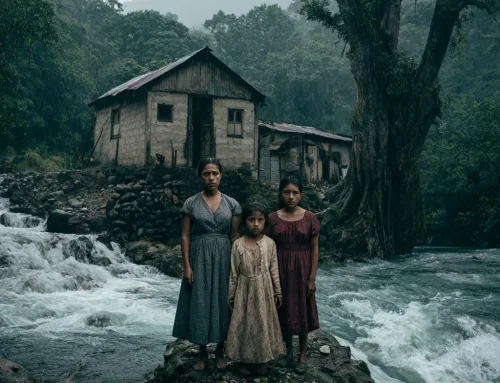
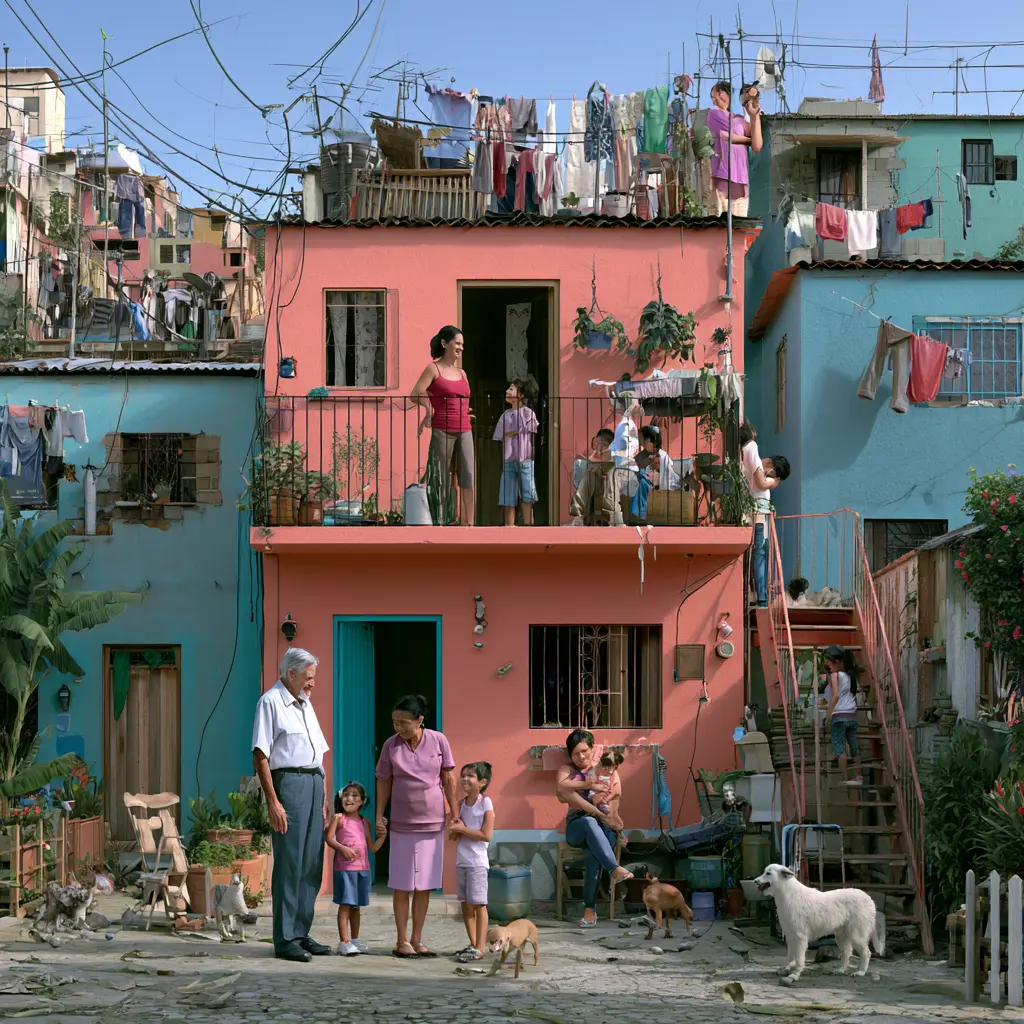
Walk into a house in a Honduran village at seven in the morning and try to work out who lives there. It is harder than it sounds. A grandmother is at the stove. Two small children are underfoot who may or may not be hers. A young woman is braiding hair on the step, and she might be a daughter, a niece, or a neighbor’s daughter who stayed the night because the walk home was too far in the dark. A man comes in from the yard and is introduced as compadre — a word that has no clean English equivalent and that carries more weight than “friend.”
Outsiders often read this as informality, or as crowding born of poverty. It is neither. It is a structure, and a very old one, with its own logic, obligations, and internal accounting. Understanding it is not an anthropological nicety for anyone who wants to help Honduran families. It is the difference between aid that lands and aid that slides off.
At the Savage-Rivera Foundation we have spent years working alongside families in Honduras, and the single most useful thing we have learned is this: the household, not the individual, is the unit that matters. A scholarship does not go to a student. It goes to a household that then has to decide whether it can spare that student’s labor. A small loan does not go to a woman. It goes into a web of people who will all have some claim on it. The rich tapestry of Honduran culture and traditions is not a backdrop to that economic reality — it is the operating system running underneath it.
Who Actually Lives in the House
The nuclear family — two parents, their children, a door that closes on the rest of the world — is a relatively recent and relatively northern arrangement. In Honduras it exists, particularly in San Pedro Sula and the wealthier neighborhoods of Tegucigalpa, but it is not the default and it is not the aspiration for most people.
The more common shape is the extended household: three generations under one roof, or spread across two or three structures on the same patch of land, sharing a kitchen, a water source, and a budget. Grandparents are not visitors. They are working members of the unit — watching children, tending a garden plot, managing the small daily commerce that keeps cash moving. Adult siblings who have not yet formed their own households stay. Adult siblings who have formed their own households and then lost a job, a spouse, or a harvest come back. The door swings both ways, permanently.
Honduras also has an unusually high share of what demographers call skipped-generation households — grandparents living with grandchildren, with the middle generation absent entirely. A United Nations population analysis of living arrangements found that more than ten percent of older persons in Honduras live solely with their grandchildren, a rate matched in the region only by Haiti, Jamaica, and the Dominican Republic. That statistic is the demographic shadow of migration, and we will come back to it.
The practical consequence is that Honduran households are elastic in a way that Western household budgeting models simply do not capture. Income arrives from four or five directions and is pooled. Childcare is absorbed without a market transaction. Housing costs are shared down to near-zero for the people who most need them. This elasticity is genuinely protective — it is a large part of why Honduran poverty, severe as it is, has not produced the levels of homelessness and institutional care you would expect from the income figures alone. It is also why the gap between rural and urban poverty in Honduras looks different on the ground than it does in a spreadsheet: the rural household has less cash and more kin, and kin does real work.
Compadrazgo: The Family You Choose
If blood kinship is the first structure, compadrazgo is the second — and in some Honduran communities it is the more consequential of the two.
The word means, literally, co-parenthood. It begins at a baptism. Parents choose godparents — padrinos — for their child, and in doing so they do not simply assign a ceremonial role. They create a permanent relationship between two sets of adults. From that day the parents and godparents address one another as compadre and comadre, and the relationship carries obligations that are understood without being written down: you help, you lend, you show up, you do not embarrass each other in public, and if something happens to one household the other steps in.
The anthropologist Roland Armando Alum, writing on the continuing relevance of compadrazgo in Latin America, identifies four functions this institution performs: it extends personal networks, intensifies existing kinship ties, fosters mutual support and social harmony, and confers prestige. He also draws a distinction that matters enormously for anyone doing development work — between horizontal compadrazgo, formed between social equals, and vertical compadrazgo, in which a family invites a higher-status person to be a godparent. Horizontal ties spread risk across a peer group. Vertical ties pull resources downward, but they also create obligation and can shade into patron-client relationships.
What is striking is how far the institution has expanded beyond baptism. In Honduras today you will find padrinos for confirmations, first communions, weddings, quinceañeras, and school graduations — and it is that last one that quietly matters most. A graduation padrino is frequently the person who paid for the uniform, the shoes, the exam fees, the bus fare. Sponsoring a child through school is one of the most common forms the relationship takes, and it operates as a private, culturally sanctioned scholarship system that predates every NGO in the country.
The institution has also proven remarkably adaptable to distance. Migration was supposed to kill compadrazgo. Instead, families developed workarounds — including padrinos de brazos, proxy stand-ins who hold the child at the font on behalf of a godparent watching from Houston or Miami. The obligation crosses the border intact. So, usually, does the money.
What Migration Does to the Shape of a Family
No honest account of the Honduran family in 2026 can avoid migration. Remittances now run at roughly a quarter of Honduras’s entire gross domestic product — a share more than five times the global average — and we have written before about how the Honduran diaspora is transforming families back home. But the money is only half the story. The other half is the reorganization of the household that makes the money possible.
When a parent migrates, someone else takes the children. Across Latin America, UNICEF research on children who stay behind finds that grandparents are by far the most common caregivers, followed by the remaining parent, then aunts and uncles, then older siblings. Up to a fifth of children in the region are living without one or both parents as a direct result of migration. Those skipped-generation households in the UN data are not an exotic anomaly. They are the domestic architecture of a remittance economy.
This arrangement works, in a narrow sense. Cash arrives. Roofs get repaired, school fees get paid, a small business gets started. But the same research finds the costs clearly: children in migrant-parent households are more likely to work, more exposed to violence and recruitment by gangs, and — in their own words, repeatedly — lonely in a way that money does not touch. One adolescent quoted in the UNICEF review put it about as plainly as it can be put: the basic needs are covered, but the money does not compensate for the loneliness.
This is the point where cultural structure and psychological reality meet. The extended family absorbs the shock of a parent’s departure better than almost any other arrangement could — and it still does not absorb it completely. Our earlier look at the psychological effects of poverty on Honduran families touched on the same seam: resilience is real, and it is not free. Someone carries the cost, and it is usually a grandmother in her sixties and a child who does not fully understand why the phone calls are the relationship now.
The Household as a Working Economic Unit
It is easy to romanticize all this. It should not be romanticized — but it should be respected, because it is productive. The Honduran extended household is not only a shelter. It is a labor pool, a credit union, an insurance scheme, and a training program.
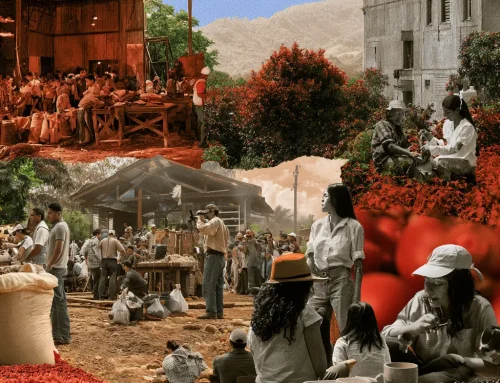
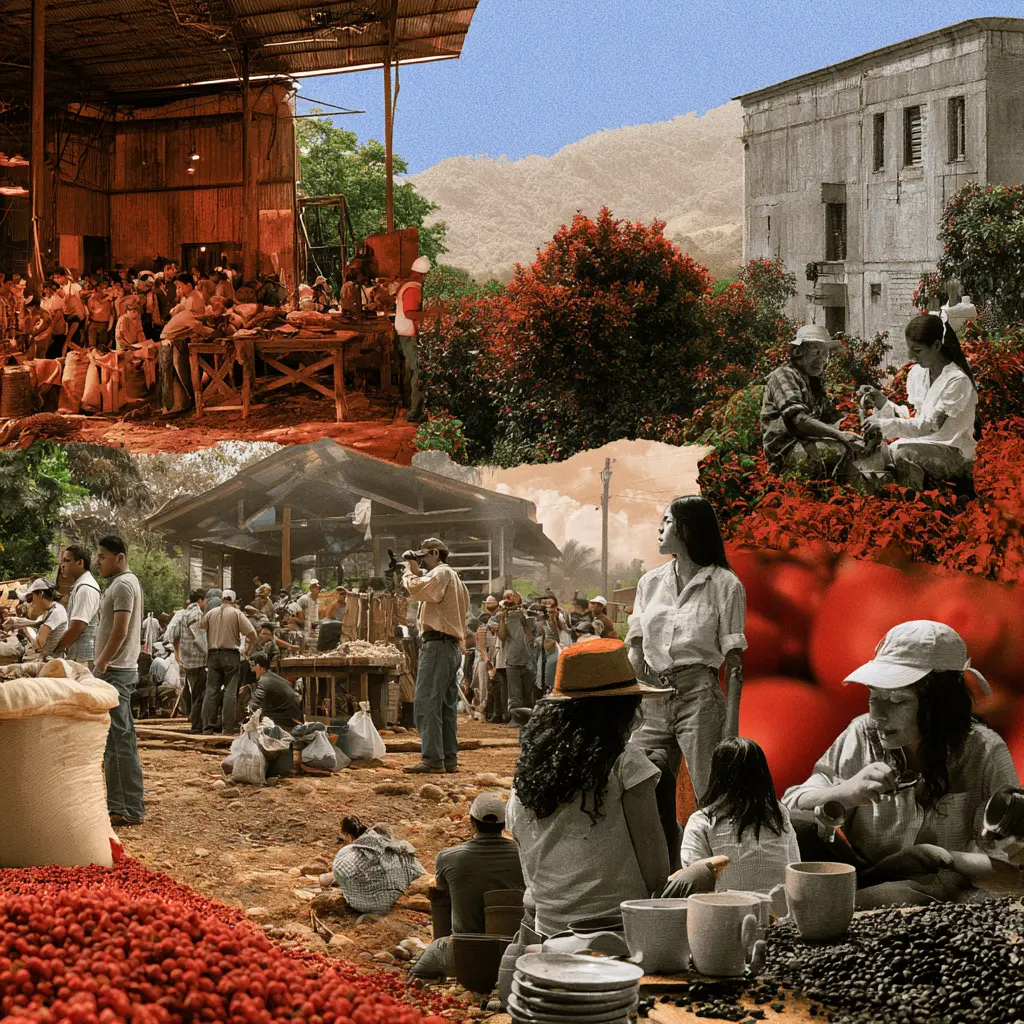
Consider the smallholder coffee farms we wrote about last month. The vast majority of Honduran coffee comes from producers working fewer than three and a half hectares, and the harvest on those farms is run almost entirely by family labor — the same coffee culture and family life that gives the country its most valuable export is, structurally, an extended-household enterprise. The picking crew is the family plus the compadres. The credit that carries the farm from planting to sale is often kin credit. The knowledge of when to pick is passed down inside the house, not taught in a classroom.
The same pattern repeats across the informal economy, which employs the majority of working Hondurans. A market stall is staffed in shifts by whoever is available that day. A pulpería — the small front-room shop found on nearly every block — is run by a grandmother in the morning and a teenager after school. A construction crew is assembled from cousins and compadres. None of this appears cleanly in formal employment statistics, and all of it is how families actually eat.
For anyone designing assistance, the implication is direct. Interventions that treat the individual as the unit tend to underperform, because they fight the structure. Interventions that treat the household as the unit — and that account for the obligations radiating outward from it — tend to stick. A loan evaluated on one woman’s income statement misreads her actual capacity in both directions: she has more support than the statement shows, and more claims on her than it shows too.
Where the Structure Is Strained
Three pressures are visibly reshaping Honduran family life right now, and none of them are going to reverse soon.
Urbanization. City housing is smaller, more expensive, and less expandable than a rural compound where you can put up another room. The physical container that made the extended household possible is disappearing faster than the expectations attached to it. Families are trying to run a twelve-person social structure inside a four-person apartment.
Aging caregivers. Skipped-generation households depend on grandparents who are healthy enough to raise children. Honduras has limited rural health infrastructure and almost no formal elder care. When the grandmother holding a household together gets sick, there is no second line — and the children in that house are frequently the ones who absorb the consequence, often by leaving school.
Religious and social change. Compadrazgo is rooted in Catholic sacramental practice, and Honduras has seen substantial growth in evangelical congregations over the past three decades. The church-based obligation network is not vanishing — evangelical congregations build dense mutual-aid networks of their own — but the vocabulary and the mechanics are shifting, and the older formal ties are thinner among younger urban Hondurans than among their parents.
The honest read is that the traditional structure is still carrying most of the weight, and that it is carrying it with less margin every year. That is not a reason to build around it. It is a reason to reinforce it.
What This Means for How We Work
The Savage-Rivera Foundation’s approach has been shaped by these observations more than by any theory of development. A few things follow from them.
Fund the household, not the beneficiary. When we support a student, we try to understand what that student’s absence from the household economy costs, and to cover it. Otherwise the scholarship quietly competes with the family’s survival, and survival wins.
Work through existing obligation networks rather than around them. The people a family already trusts — compadres, parish leaders, the women who run the local savings groups — have better information about who needs what than any outside assessment will produce, and they carry enforcement power that no outsider has.
Support the caregivers, not only the children. A grandmother raising four grandchildren on remittances and a garden plot is running one of the most important institutions in the country. She usually receives no recognition, no training, and no health care. She is the highest-leverage person in the system.
Be patient with reciprocity. Assistance that arrives without any expectation of return can be corrosive in a culture where obligation is how relationships are built and dignity is maintained. Families want to be participants, not recipients. Designing a role for them is not a formality; it is the whole thing.
The Longer View
There is something worth sitting with here for those of us who live in places like Connecticut. The Honduran household solves, informally and at no cost, several problems that wealthy societies spend enormous sums failing to solve: elder care, childcare, youth unemployment, social isolation. It does so because obligation is assumed rather than negotiated — and because people stay close. Anyone who has spent time traveling through Honduras and the wider region notices the same thing eventually: the houses with the least in them are frequently the least lonely places you will ever stand in. Both halves of that sentence are true, and neither cancels the other.
There is a version of this instinct closer to home, too. The impulse behind a collection assembled and maintained over decades — keeping a thing intact, knowing its history, handing it on to someone who will care for it — is recognizably the same impulse a Honduran family applies to its relationships. Hondurans are simply much better at it, and they practice it with people rather than objects. The open question for the next decade is whether the combined pressure of migration, urbanization, and climate can be absorbed without that particular inheritance being quietly spent down.
That is the work. It is slower than writing checks and it is considerably more interesting.
About the Author
Mike Savage of New Canaan, CEO of 1-800Accountant, founder of Savage-Rivera Foundation, established the Foundation with his wife Sandra to support families living in poverty in Honduras and across Central America. His work is documented at the Savage New Canaan hub, and he shares photography and cultural notes from the Foundation’s work on Pinterest.