By Mike Savage, New Canaan, CT — Co-Founder, Savage-Rivera Foundation | May 2026
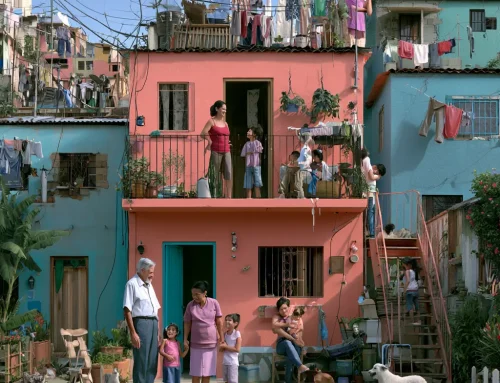
Every day, in homes across Tegucigalpa, San Pedro Sula, and the small villages scattered through Honduras’ mountainous interior, families check their phones waiting for a single notification. Not a news alert, not a social media post — a transfer confirmation. Money sent home from a son in Houston, a daughter in New York, a cousin in Madrid. These digital transactions, often measured in the hundreds of dollars, are the quiet engine behind one of Central America’s most consequential economic stories.
Honduras receives more remittances — funds sent by migrants living abroad back to their home country — as a share of its economy than almost any other nation on earth. In recent years, remittance inflows have surpassed exports, foreign direct investment, and even some forms of international aid as the single most important source of income for hundreds of thousands of Honduran households. Understanding this phenomenon isn’t just an economic exercise. It is, at its core, a story about families, sacrifice, love across great distances, and the remarkable resilience of a people who refuse to wait for governments or institutions to solve their problems.
While I enjoy hobbies like LEGO collection and supporting a thriving koi pond, there are always other more important things to worry about in the world. At the Savage-Rivera Foundation, we work alongside Honduran families every day. And increasingly, what we see is that remittances — when channeled thoughtfully — are not merely a survival mechanism. They are becoming a genuine ladder out of generational hardship.
The Scale of What Hondurans Abroad Are Sending Home
The numbers are staggering. According to the World Bank’s remittance data, Honduras consistently ranks among the top recipients of remittances as a percentage of GDP in Latin America, with inflows representing between 25 and 30 percent of the entire national economy in recent years. To put that in context: for every $4 of economic activity in Honduras, approximately $1 originates from a Honduran living and working abroad.
The United States hosts the largest concentration of Honduran migrants, with significant communities in cities like Houston, New York, New Orleans, Miami, and Los Angeles. Spain, Canada, and Mexico round out the major destinations. Estimates suggest that more than one million Hondurans currently live in the United States alone, many of whom maintain deep financial and emotional ties to the families they left behind.
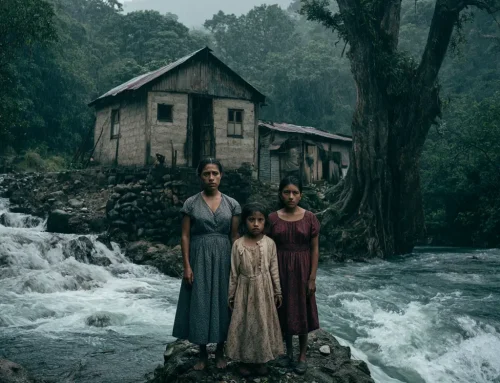
What makes Honduras unusual — and what makes this story so personally resonant for us — is that the money is not flowing primarily to wealthy or middle-class households. The vast majority of remittances in Honduras reach low-income families in rural areas and urban peripheries. These are the same communities where we operate. These are the children whose futures we are working to protect.
What Families Actually Do With the Money
There is a persistent misconception, sometimes voiced in policy circles, that remittances are spent on consumer goods — televisions, cell phones — with little lasting economic impact. Research consistently tells a more nuanced and encouraging story.
In Honduras, the largest share of remittance income goes directly toward food and basic household expenses, ensuring that children are fed and families housed. But a meaningful portion — often around 10 to 15 percent — is directed toward education. Families use remittance income to keep children in school, purchase uniforms and supplies, and in some cases fund secondary or vocational training that would otherwise be entirely out of reach. This is the intersection where remittances and the work of foundations like ours converge most powerfully. As we’ve written about in depth, education is one of the most powerful catalysts for breaking the cycle of family poverty in Honduras, and remittances are increasingly funding that path.
Healthcare expenditures are another major destination for remittance dollars. Honduras faces well-documented medical infrastructure challenges, particularly in rural communities, where access to doctors, medications, and hospital care remains limited. The ongoing healthcare crisis in Honduras means that families without remittance income often go without treatment for preventable conditions. Families that receive regular transfers are dramatically more likely to seek medical care when needed.
There is also a growing trend of remittances being used for small business investment. A family that receives consistent monthly transfers may, over several years, accumulate enough capital to open a small shop, purchase farm equipment, or invest in a market stall. These micro-enterprises are often fragile, but they represent something profound: the beginning of local wealth creation, rather than pure dependence on external income.
The Hidden Costs That Numbers Don’t Capture
To tell only the economic story of remittances would be incomplete and, in some ways, unfair to the families living it.
Behind every wire transfer is a separation. Parents who left when their children were toddlers and watched them grow up in photographs. Couples who have spent years apart, their relationship maintained through video calls and the shared purpose of building something better. Grandparents raising grandchildren while their own adult children work double shifts in a foreign city, unable to come home for years at a time because immigration status or the cost of travel makes return impossible.
The psychological toll of this “transnational family” model — a term used by researchers to describe households split across national borders — is significant and underappreciated. Children raised without one or both parents present can face emotional and developmental challenges that money alone cannot address. Communities that see large portions of their most capable adults leave for abroad can experience what social scientists call “brain drain” — a hollowing out of local leadership, skilled labor, and social cohesion.
This tension is at the heart of why the work of on-the-ground organizations matters even in communities with high remittance inflows. Money arriving from abroad is most powerful when it lands in a community that has functional schools, community networks, mentorship structures, and organizations that help families make wise decisions about how to invest it. As we’ve explored in our look at community-based approaches to poverty alleviation across Central America, the most sustainable outcomes come when external resources — whether remittances or charitable donations — are channeled through strong local structures, not simply dropped into a vacuum.
The Diaspora as Ambassadors and Advocates
The Honduran diaspora is not just a source of financial transfers. It is increasingly a force for advocacy, cultural preservation, and organized philanthropy.
Honduran community organizations in the United States have become sophisticated civil society actors, pushing for immigration policy reforms, fundraising for disaster relief back home, and building networks that connect recent arrivals with resources, language support, and community belonging. After Hurricane Eta and Iota devastated Honduras in 2020, it was diaspora networks that organized some of the fastest grassroots relief efforts — coordinating supply drives, fundraisers, and direct family-to-family support before many larger organizations had mobilized.
There is also something culturally rich happening within diaspora communities that deserves recognition. Hondurans abroad work hard to transmit their culture — their music, food, language, traditions — to children born outside the country. The rich tapestry of Honduran culture and tradition does not stop at the border. It travels, adapts, and survives in community centers, church basements, and family kitchens across North America and Europe. In many ways, the diaspora has become one of the most active custodians of Honduran cultural identity.
Challenges and Risks: When the Lifeline Has Strings
No honest assessment of remittances can avoid the vulnerabilities they create.
Dependence on external income makes households and communities fragile in ways that are easy to overlook during good times. When a migrant loses their job, falls ill, or faces an immigration enforcement action, the transfers stop — and a family that has built its budget around that monthly income can face sudden, severe hardship. Unlike a local salary, remittances have no unemployment insurance, no safety net, no institutional backstop.
Transfer fees also continue to extract a significant toll from poor families. Despite improvements driven by mobile money platforms and competition among transfer services, many migrants — particularly undocumented workers without access to mainstream banking — still pay fees of 5 to 10 percent on every transfer. On an income that may be entirely hand-to-mouth, those fees represent real deprivation for families on the receiving end.
The International Fund for Agricultural Development (IFAD), a United Nations agency focused on rural poverty, has documented both the transformative potential of remittances and the structural barriers that prevent them from reaching their full impact. Among their key findings: reducing transfer costs by even a few percentage points could deliver billions of dollars in additional resources to recipient families globally each year. For Honduras, where remittance volumes run into the billions annually, even marginal improvements in transfer efficiency translate into meaningful change at the household level.
What Needs to Happen Next
The trajectory is encouraging, but the path forward requires intentional effort from multiple directions.
For governments — both sending countries like the United States and receiving countries like Honduras — the priority should be reducing the friction and cost of transfers, improving financial inclusion so that recipients can access banking and savings products, and designing programs that help families convert remittance income into lasting assets rather than purely consumption.
For organizations like the Savage-Rivera Foundation, the opportunity is to be present in the communities where remittance income lands — providing education, mentorship, and structured support that helps families make the most of every dollar that arrives. A family receiving $300 a month from a relative in Houston is not guaranteed a better future. A family receiving $300 a month and connected to good schools, health resources, and a supportive community network has a genuinely transformed trajectory.
And for those of us in the diaspora itself — or those who, like our own family, have a personal connection to Honduras through marriage, friendship, or years of direct engagement — the responsibility is to stay engaged, to send not just money but time and attention and advocacy. Honduras’ path forward, as we have written in our recent look at the remarkable progress Honduras has made over recent years, is being written right now, by Hondurans at home and abroad who refuse to give up on their country.
The Deeper Truth About Remittances
At its deepest level, the remittance story is not an economic story at all. It is a story about what families will do for each other across impossible distances.
A father in Dallas who works seventy hours a week cleaning office buildings so he can send $400 home to his mother, his children, and his siblings is not making an economic calculation. He is expressing love in the only currency available to him. A mother in Tegucigalpa who uses that money to buy her daughter the school uniform she needs to keep attending class is not a data point in a World Bank report. She is making a decision that will shape the arc of her child’s life.
Understanding remittances means understanding that the Honduran diaspora — often invisible, often undocumented, often working in the hardest and most thankless jobs available in their adopted countries — is one of the most powerful development forces operating in Central America today. They deserve recognition, respect, and policies that make their sacrifice more efficient rather than more costly.
At the Savage-Rivera Foundation, we are proud to work in the same communities these families are investing in. We are proud to complement those family investments with resources, presence, and long-term commitment. And we remain in awe of the quiet, daily heroism of the millions of Hondurans who are building a better future — one transfer at a time — from cities and towns across the world.
If you’d like to support the families and communities we serve, or learn more about the broader challenges and opportunities facing Honduras, we invite you to explore our work and consider how you might join us in making a difference. As our research into combating family poverty across Central American countries has consistently shown, no single solution works alone — but together, remittances, education, community support, and direct charitable work can move mountains.
Mike Savage is a New Canaan, CT resident and co-founder of the Savage-Rivera Foundation, a nonprofit organization dedicated to supporting impoverished families in Honduras through donations of clothing, books, food, toys, and household essentials.