By Mike Savage, New Canaan, CT — Co-Founder, Savage Rivera Foundation
When my wife Sandra was growing up in Honduras, poverty was not an abstract concept — it was the texture of daily life. It was the neighbor who skipped meals so her children could eat, the child who dropped out of school to help the family scrape together enough for rent, the father who left for the city hoping for work and rarely found it. Years later, as co-founders of the Savage Rivera Foundation, Sandra and I have dedicated ourselves to understanding those dynamics and doing what we can to address them. But before we can solve a problem, we have to understand it.
Honduras is frequently cited as one of the poorest nations in the Western Hemisphere. More than 60% of the population lives below the national poverty line, and close to one in five Hondurans subsists on less than $2 a day in what the World Bank classifies as extreme poverty. These are not just statistics — they represent generations of human potential that has been constrained by forces both historical and structural.
Let me walk you through what I have come to understand about why poverty runs so deep in Honduras, and why addressing it requires more than charity — it requires systemic change.
A History That Still Casts a Long Shadow
To understand Honduras today, you have to start several centuries ago. Spanish colonization fundamentally restructured Honduran society, displacing indigenous communities, concentrating land in the hands of a small elite, and establishing patterns of inequality that have never fully been dismantled.
By the time Honduras gained independence in 1821, power remained concentrated among a landowning class, and the majority of the population — particularly indigenous and mestizo communities — inherited a system that was never designed to serve them.
The 20th century brought its own complications. United States-backed banana companies, particularly the United Fruit Company, exerted enormous influence over Honduran politics and economics for decades. This era of so-called ‘banana republic’ governance — explored in detail in our post on Honduras’ remarkable journey to independence — left behind an economy heavily dependent on agricultural exports, with little infrastructure for domestic industry or diversified employment. The resulting economic fragility has made Honduras acutely vulnerable to global commodity price swings, natural disasters, and political instability ever since.
The Education Gap: Breaking the Cycle Requires Learning
If there is one factor that development economists consistently point to as the most powerful lever for escaping poverty, it is education. And Honduras continues to face serious structural barriers in this area. While primary school enrollment rates have improved in recent decades, dropout rates remain stubbornly high — particularly in rural areas, where children are often needed at home or in the fields to help support the family. Secondary school completion rates are especially low, leaving many young Hondurans without the qualifications needed for anything beyond low-wage, informal labor.
The quality of education is also a significant concern. Underfunded schools, undertrained teachers, and inadequate infrastructure — especially in remote mountainous regions — mean that even children who do attend school frequently receive an education that leaves them underprepared for the modern economy. Language barriers add another layer of complexity, particularly for indigenous communities whose first language is not Spanish.
The consequences of this educational gap compound over time. Children who cannot read proficiently by third grade are statistically far more likely to drop out, far less likely to escape poverty, and far more vulnerable to exploitation. This is a cycle Sandra and I have seen up close — and it is why the Savage Rivera Foundation prioritizes getting educational materials into the hands of Honduran children. I wrote more extensively about this in our post on education as a pathway out of poverty, which I encourage you to read.
Healthcare Deficits: Poverty and Illness Feed Each Other
Healthcare and poverty exist in a vicious mutual relationship in Honduras. Poor families cannot afford preventive care, so minor illnesses become serious ones. Serious illnesses drain whatever financial resources a family has managed to accumulate, pushing them further into poverty. This cycle is especially brutal for children and pregnant women, whose health outcomes track closely with household income levels.
Honduras spends a relatively small share of its GDP on public health, and the result is a healthcare system that is chronically under-resourced. Rural areas are particularly underserved — clinics are sparse, medical staff are concentrated in urban centers, and supply chains for basic medicines are unreliable. The COVID-19 pandemic exposed just how fragile this system was, with devastating consequences for Honduran families who had no medical safety net to fall back on. If you want to understand these healthcare challenges in more depth, our article on ongoing Honduras medical challenges lays out the situation in concrete terms and suggests ways you can help.
Limited Economic Opportunity and the Informal Labor Trap
Honduras’ economy has long struggled to generate enough formal, well-paying jobs for its workforce. Agriculture remains a dominant employer, but agricultural wages are low and the sector is vulnerable to climate volatility. Coffee, one of Honduras’ key exports, has been increasingly threatened by both the coffee berry borer pest and shifting rainfall patterns driven by climate change. Hurricanes Eta and Iota in 2020 devastated large swaths of the country, destroying crops, infrastructure, and homes simultaneously — setting back years of economic progress in a matter of days.
For those who cannot find formal employment, the informal economy — street vending, domestic labor, day work in construction — offers a precarious alternative. Informal workers are not covered by labor protections, cannot access credit, and have no safety net when illness, injury, or disaster strikes. This informality traps families in a cycle of economic vulnerability with no reliable path upward.
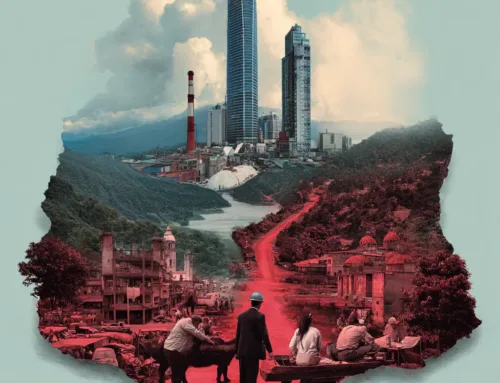
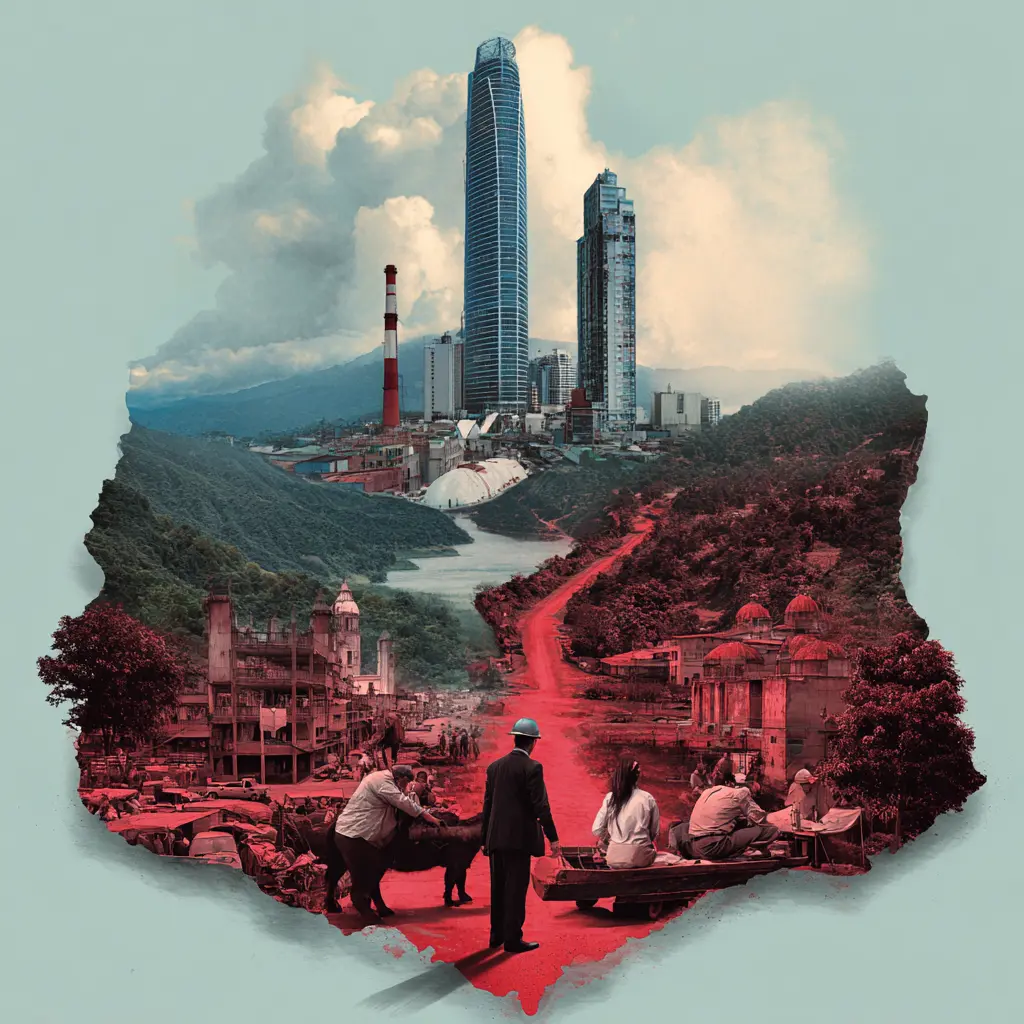
The geography of poverty in Honduras is also worth understanding. Rural communities tend to be the most severely affected, cut off from economic opportunity, services, and infrastructure. But urban poverty — particularly in the shantytowns surrounding Tegucigalpa and San Pedro Sula — is rising as migration from the countryside accelerates. Our post on rural vs. urban poverty in Honduras explores how these two faces of poverty differ and intersect.
Inequality, Violence, and the Poverty Trap
Honduras has one of the highest levels of income inequality in Latin America — a region already infamous for its wealth disparities. The GINI coefficient, a standard measure of inequality, consistently places Honduras among the most unequal societies in the world. This means that even when the economy grows, the benefits tend to flow to those who already have the most, while those at the bottom see little improvement in their daily lives.
Violence compounds all of these challenges. Gang activity, extortion, and organized crime have made large parts of the country dangerous for ordinary citizens — and disproportionately so for the poor, who cannot afford private security or to relocate. Violence discourages investment, disrupts schooling, and drives migration. It also inflicts a particular toll on children, many of whom are recruited, exploited, or harmed by criminal organizations. The connection between family poverty and child exploitation is something we’ve explored in depth in our post on child labor and family poverty in Honduras, which is essential reading for anyone who wants to understand the human consequences of economic desperation.
Reasons for Hope — and What We Can Do
For all the weight of these challenges, Honduras is not without cause for optimism. Government social programs like the Bono Vida Mejor cash transfer initiative have helped cushion the blow of extreme poverty for some of the country’s most vulnerable families. International organizations including the World Bank and UNICEF have invested in education, maternal health, and food security programs that are beginning to show results. Civil society organizations — including faith-based groups, local NGOs, and foundations like ours — are filling gaps that government and institutional programs cannot reach.
Sandra and I have seen the difference that even modest, targeted interventions can make. A box of children’s books delivered to a remote village. A clothing drive that ensures children have warm clothes when the highland temperatures drop. These acts do not solve systemic poverty on their own — but they remind families that they are not forgotten, and they keep children in school and healthy enough to have a fighting chance. The Savage Rivera Foundation was built on the belief that every contribution — large or small — moves the needle.
The root causes of poverty in Honduras are deep, intertwined, and resistant to easy solutions. Colonialism shaped the distribution of land and power. Banana-era dependency stunted economic diversification. Underinvestment in education and healthcare compounded across generations. Violence drove away investment and drove out families. Climate change now threatens the agricultural foundation that millions depend on. None of these problems can be solved overnight — or by any single organization acting alone.
But understanding them is the first step. And acting on that understanding — consistently, compassionately, and with a clear view of what the data says — is how Sandra and I have tried to do our part. I hope you will consider joining us.