By Mike Savage, New Canaan, CT
Understanding the history of a nation is essential to understanding its people. As someone deeply connected to Honduras through my wife Sandra and our work with the Savage-Rivera Foundation to help impoverished families and children, I’ve developed a profound appreciation for the rich historical tapestry that has shaped this beautiful Central American country. Honduras’ path from ancient civilizations through colonial subjugation to hard-won independence is a story of resilience, cultural fusion, and the enduring human spirit.
The Pre-Columbian Era: A Land of Ancient Civilizations
Long before European ships appeared on the horizon, the lands we now call Honduras were home to sophisticated indigenous civilizations that had developed complex societies, impressive architecture, and advanced knowledge systems. The Mayan archaeological sites scattered across Honduras serve as enduring testaments to these remarkable ancient peoples.
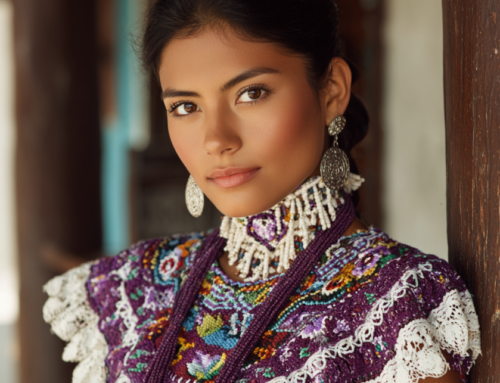
The western-central region was predominantly inhabited by the Lenca people, who developed sophisticated agricultural techniques and established trading networks that stretched across Central America. The Lenca built organized communities governed by complex social structures, and their resistance to colonial domination would later produce one of Honduras’ most celebrated national heroes. Other indigenous groups, including the Pech, Tawahka, Miskito, and Tolupan, occupied various regions throughout the territory, each contributing distinct cultural traditions, languages, and ways of life that continue to influence Honduran identity today.
The Maya civilization reached its southernmost extent in what is now western Honduras, with Copán emerging as one of the most significant Maya city-states. Between 400 and 800 CE, Copán flourished as a center of art, astronomy, and political power. The city’s elaborate stelae, intricately carved with hieroglyphic inscriptions, and its architectural marvels demonstrate the advanced capabilities of these ancient peoples. The Maya developed sophisticated calendrical systems, made remarkable astronomical observations, and created written records that scholars continue to study centuries later.
These diverse indigenous communities did not exist in isolation. Archaeological evidence reveals extensive trade networks connecting Honduras to regions as distant as Mexico and Panama. Cacao, obsidian, jade, and other valuable commodities flowed through these networks, fostering cultural exchange and economic interdependence among Central America’s pre-Columbian peoples.
Spanish Arrival and the Colonial Period
The arrival of Christopher Columbus on July 30, 1502, during his fourth and final voyage to the Americas, marked the beginning of a transformative and often tragic chapter in Honduran history. Columbus landed near modern-day Trujillo on the Caribbean coast and claimed the territory for the Spanish Crown. According to historical accounts, he named the region “Honduras”—meaning “depths” in Spanish—referring to the deep coastal waters he encountered.
The true colonization of Honduras began in earnest two decades later. In 1523, Spanish conquistador Gil González Dávila led the first expeditionary force into Honduran territory. The following year, Cristóbal de Olid arrived on behalf of Hernán Cortés, establishing the settlement of Triunfo de la Cruz. However, Olid’s attempt to create an independent government led to conflict and his eventual execution, illustrating the volatile nature of early colonial ambitions.
The Spanish conquest met fierce resistance from Honduras’ indigenous populations. The Lenca people, in particular, mounted a sustained military campaign against the invaders. Their leader, Chief Lempira, united various indigenous groups in an unprecedented alliance against Spanish forces. Lempira’s strategic brilliance and unwavering determination made him a formidable opponent, and he remains celebrated in Honduran culture as a national hero whose legacy symbolizes courage and resistance against oppression. His image appears on Honduran currency, and July 20th—Lempira Day—commemorates his heroic stand against colonial forces.
Despite indigenous resistance, the Spanish had established effective control over Honduras by 1539. The colony’s early importance stemmed from gold discoveries, and the mining town of Gracias briefly served as the capital of Spanish Central America (the Audiencia de los Confines) in 1544. However, gold deposits proved limited, and by 1548, the administrative capital had shifted to Santiago (present-day Antigua Guatemala). Honduras subsequently became a relatively neglected province within the Kingdom of Guatemala, part of the larger Viceroyalty of New Spain.
The colonial period fundamentally transformed Honduran society. The encomienda system forced indigenous peoples into labor arrangements that decimated their populations through overwork and exposure to European diseases against which they had no immunity. Spanish missionaries introduced Christianity, often suppressing indigenous religious practices while inadvertently creating syncretic traditions that blended European and native beliefs. The colonial administration established new settlements at Comayagua, Gracias, and Tegucigalpa, which became centers of Spanish authority and commerce.
The introduction of African slaves, primarily to work in mining operations and coastal plantations, added another dimension to Honduras’ demographic composition. The Garifuna people, descendants of African slaves who shipwrecked near St. Vincent and intermarried with indigenous Caribs, would later arrive on Honduran shores in 1797, adding a vibrant Afro-Indigenous cultural element to the nation’s heritage.
The Road to Independence
By the early nineteenth century, nearly three centuries of Spanish colonial rule had created deep social stratifications and economic frustrations throughout Central America. The rigid class system privileged peninsulares (Spanish-born colonists) over criollos (American-born Spanish descendants), while mestizos, indigenous peoples, and those of African descent occupied progressively lower social positions. This inequality bred resentment that would eventually fuel independence movements.
The catalyst for Central American independence came from events far beyond the region’s borders. Napoleon Bonaparte’s 1808 invasion of Spain and the subsequent imprisonment of King Ferdinand VII created a constitutional crisis that reverberated throughout the Spanish Empire. The disruption of Spanish governance emboldened colonial subjects to question imperial authority, while the ideas of the Enlightenment—liberty, equality, and self-determination—inspired intellectual and political leaders throughout the Americas.
In Central America, the early nineteenth century brought economic hardship that intensified calls for change. Locust plagues and increased competition from other producing regions devastated the indigo trade that had been central to the regional economy. Burdensome taxes imposed to support Spain’s resistance against French occupation further strained colonial resources and patience.
The movement toward independence gained momentum following Mexico’s successful break from Spain in 1821. On September 15, 1821, a council of notables gathered in Guatemala City and signed the Act of Independence of Central America, declaring the former Kingdom of Guatemala free from Spanish rule. This declaration, drafted primarily by the Honduran intellectual José Cecilio del Valle, proclaimed independence for the five provinces that would become Guatemala, Honduras, El Salvador, Nicaragua, and Costa Rica. Remarkably, Central America achieved independence without the prolonged military conflicts that characterized independence movements elsewhere in Latin America.
The United Provinces and the Path to Full Sovereignty
Independence from Spain did not immediately result in autonomous nationhood for Honduras. The newly independent Central American provinces faced immediate pressure from Mexico, where Agustín de Iturbide had established himself as emperor. In January 1822, the provisional Central American government voted to annex the region to Iturbide’s Mexican Empire, though this decision was far from unanimous and sparked resistance in several provinces.
The Mexican annexation proved short-lived. Iturbide’s empire collapsed in 1823, and a revolution in Mexico City allowed Central America to chart its own course. Representatives from the five provinces gathered in Guatemala City and, on July 1, 1823, declared the formation of the United Provinces of Central America (later known as the Federal Republic of Central America). This new nation represented an ambitious experiment in republican governance, establishing a federal system modeled partly on the United States Constitution. According to the U.S. State Department’s Office of the Historian, the United States recognized the independence of this new federation on August 4, 1824.
Honduras played a significant role in the early years of the federation. Dionisio de Herrera became Honduras’ first democratically elected president in 1824, establishing the state’s first constitution and laying foundations for governance. The Honduran intellectual José Cecilio del Valle emerged as one of the federation’s most prominent figures, narrowly losing the first presidential election to Manuel José Arce under disputed circumstances. Del Valle’s contributions to the independence movement and his advocacy for Central American unity cement his place among the region’s founding fathers.
The Federal Republic of Central America faced internal tensions from its inception. Ideological conflicts between Liberals and Conservatives created persistent instability. Liberals generally advocated for republicanism, free trade, reduced clerical influence, and modernization along European and North American lines. Conservatives defended traditional institutions, supported the Catholic Church’s political and economic privileges, and favored more cautious approaches to change.
Perhaps no figure better embodies this turbulent era than Francisco Morazán, a Honduran general who became the federation’s most consequential leader. Morazán led Liberal forces to victory in the civil war of 1826-1829 and subsequently served as federal president from 1830 to 1839. His administration implemented sweeping reforms: curtailing church privileges, promoting education, expanding agricultural exports, and moving the federal capital from Guatemala City to San Salvador. Morazán’s vision of a unified, progressive Central America inspired generations of future leaders, and his legacy remains honored throughout the region—the department of Francisco Morazán, which contains the Honduran capital Tegucigalpa, bears his name.
Despite Morazán’s efforts, centrifugal forces ultimately tore the federation apart. Regional rivalries, economic difficulties, ideological conflicts, and a devastating cholera epidemic created insurmountable obstacles. As Britannica explains, friction between Liberal and Conservative factions undermined the federation’s cohesion. Nicaragua seceded on April 30, 1838, followed by Honduras on October 26, 1838, and Costa Rica on November 15 of that year. Guatemala formally dissolved the federation in 1839, and El Salvador—the last holdout—declared complete independence in 1841.
Honduras declared its absolute independence on November 5, 1838, finally emerging as a fully sovereign nation. This date marks the culmination of Honduras’ long journey from colonial subjugation to self-determination—though the path forward would present its own challenges.
Key Figures Who Shaped the Nation
Several remarkable individuals shaped Honduras’ path to independence and early nationhood:
Chief Lempira stands as Honduras’ preeminent national hero, symbolizing indigenous resistance to colonial domination. His military campaign against Spanish forces in the 1530s united diverse indigenous groups and demonstrated that colonial conquest would not proceed unopposed. Though ultimately defeated, Lempira’s courage and leadership continue to inspire Honduran national identity. Understanding his legacy helps us appreciate the ongoing struggles and resilience of Honduras’ indigenous communities today.
José Cecilio del Valle contributed intellectual foundations to the independence movement. A prolific writer and politician, del Valle drafted the Act of Independence of Central America and advocated for enlightened governance based on education, economic development, and regional unity. His vision of Central American cooperation influenced political thought long after his death in 1834.
Francisco Morazán represents the heroic but ultimately tragic effort to maintain Central American unity. His military leadership, reform agenda, and unwavering commitment to the federal ideal made him the most important political figure of the immediate post-independence period. Though the federation he championed collapsed, Morazán’s example continues to inspire those who envision greater Central American cooperation.
Dionisio de Herrera deserves recognition as Honduras’ first constitutionally elected leader, establishing precedents for democratic governance that would shape the nation’s political evolution.
Legacy and Modern Reflections
Honduras’ journey from ancient civilizations through colonialism to independence reveals patterns that continue to influence the nation today. The persistence of indigenous cultures, despite centuries of marginalization, demonstrates remarkable resilience. The cultural fusion of indigenous, Spanish, and African influences created the distinctive Honduran identity that my wife Sandra and I have come to love through our foundation’s work.
The challenges faced during the early republican period—regional tensions, ideological divisions, economic difficulties, and foreign intervention—foreshadowed struggles that would recur throughout Honduran history. Yet the independence era also established traditions of democratic aspiration, intellectual achievement, and resistance to oppression that remain vital to Honduran national consciousness.
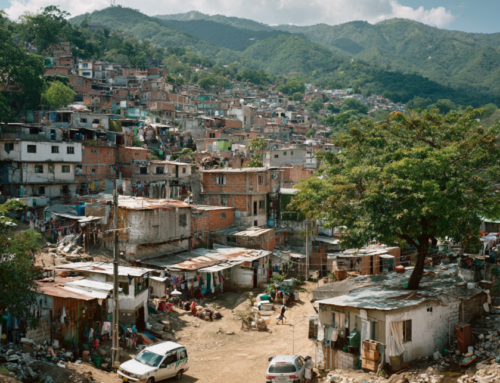
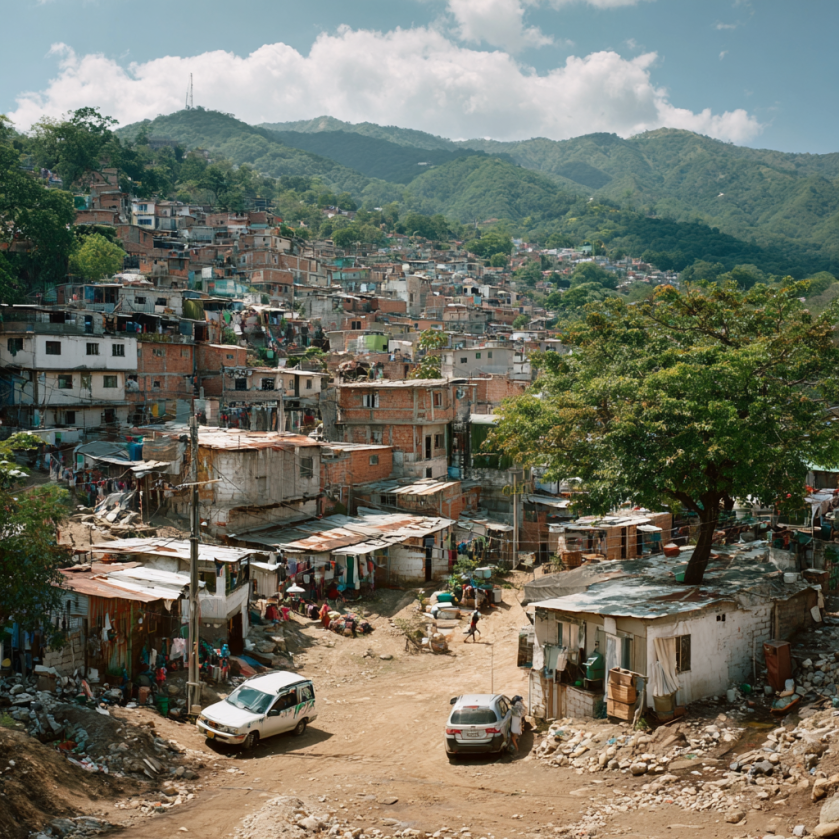
Understanding this history deepens our appreciation for Honduras today and for the challenges facing its people. The poverty that the Savage-Rivera Foundation works to address has roots extending back through centuries of colonial extraction and post-independence instability. But so too does the strength, resilience, and cultural richness that make Honduras such a remarkable nation.
As we work to support impoverished families and children in Honduras, we draw inspiration from the historical figures who fought for their nation’s freedom and from the indigenous peoples who maintained their cultures against tremendous odds. Their legacy reminds us that positive change is possible, even against formidable challenges, and that the arc of history can bend toward justice when committed individuals work together for a better future.
Mike Savage of New Canaan, CT is the Founder of 1-800 Accountant. He and his wife Sandra founded the Savage-Rivera Foundation to help impoverished families and children in Honduras. To learn more about supporting our work, please visit our website or reach out directly.